

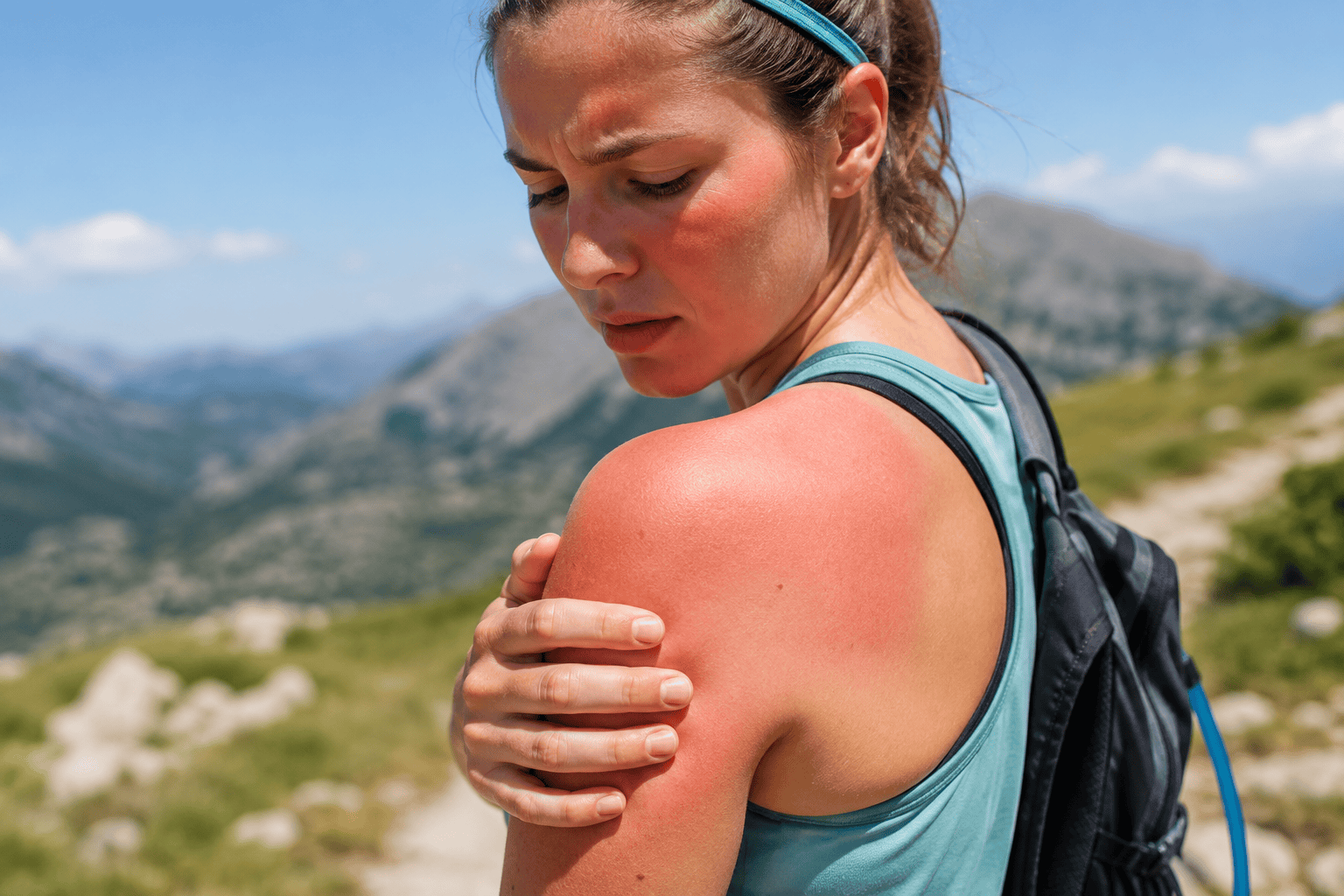
The sunshine on holiday was stronger than expected; your skin is red, hot and sensitive to touch. What is commonly referred to as sunburn is an acute inflammatory reaction of the skin triggered by UV radiation. This response often only reaches its peak several hours after exposure. Unfortunately, the resulting cell and DNA damage cannot be reversed – but some home remedies can provide a little relief.
Cooling with caution
Cool, damp compresses using a cotton cloth or a lukewarm shower help to soothe the burning sensation and pain. But be careful: do not apply ice or ice packs directly to the skin, as this can lead to cold damage. Also, make sure to drink plenty of fluids, as sunburn causes the body to lose a lot of fluid.
Aloe vera: plausible, but little evidence
Aloe vera gel is considered a classic remedy for sunburn. However, the scientific evidence is limited: whilst a 2023 review found indications of accelerated re-epithelialisation in thermal burns, robust clinical data on sunburn is largely lacking.
A chilled, fragrance-free and alcohol-free gel can still be soothing on intact skin and help calm irritated skin. If using fresh gel straight from the leaf, take care to remove as much of the yellowish plant sap (aloin) from beneath the skin as possible, as this can irritate the skin.
It’s best to steer clear of these home remedies
- Lemon juice: Can trigger a phototoxic reaction with blistering if followed by exposure to sunlight.
- Cooking oil or coconut oil: Does not cool the skin, has no proven benefits and leaves behind a greasy film that is difficult to remove. Immediately after a sunburn, oily products are also more likely to trap heat within the skin.
- Quark or yoghurt: The cooling effect comes mainly from the temperature, not from the quark or yoghurt itself. Furthermore, both pose hygiene risks on damaged skin.
And if it’s really bad?
In cases of severe pain, non-steroidal anti-inflammatory drugs (NSAIDs) may be appropriate, provided there are no contraindications. Blisters should be covered with a sterile dressing and not lanced. In the event of a fever, circulatory problems, extensive blistering or burns covering a large area, a visit to the GP’s surgery is essential.